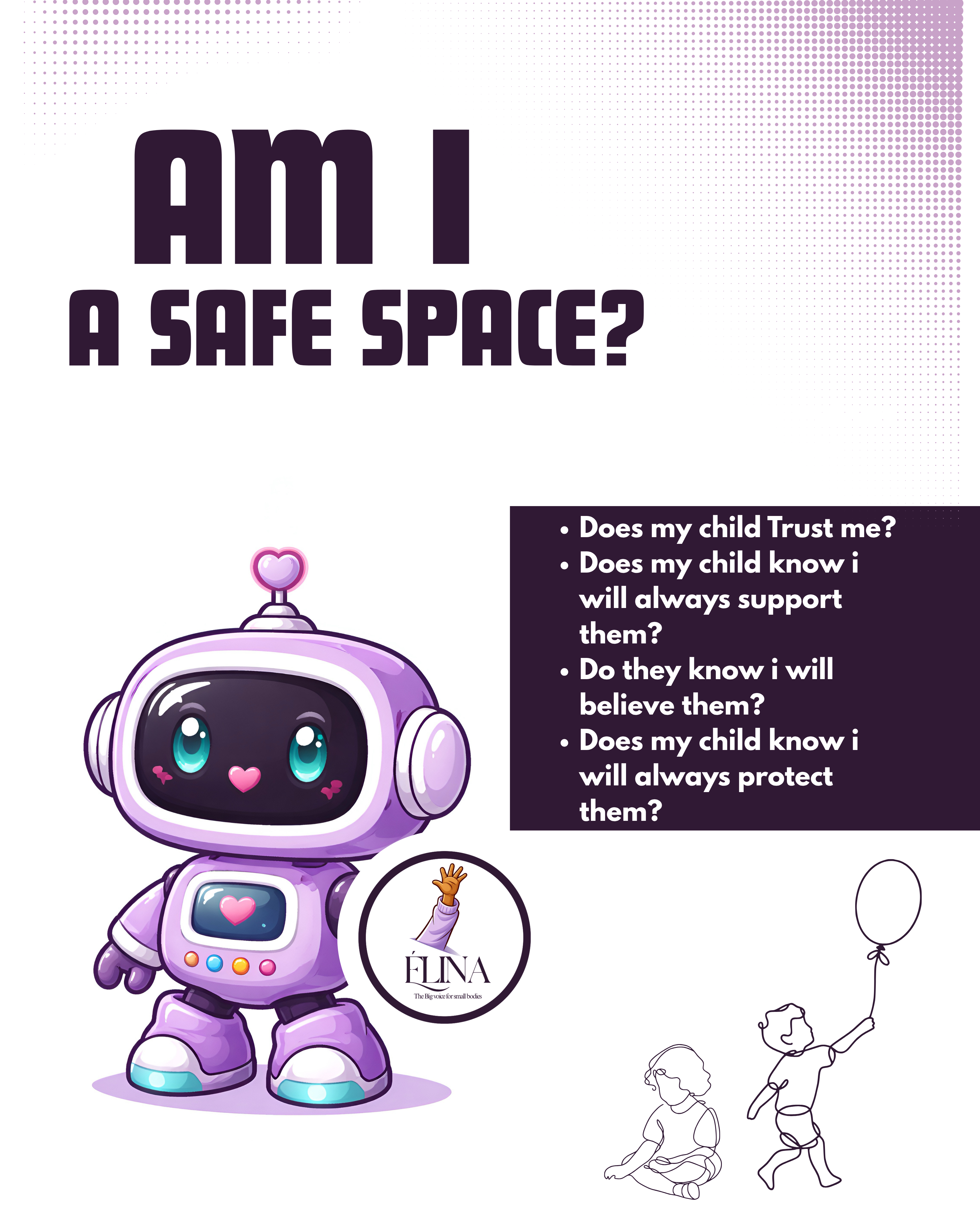
Being a safe space does not mean being a perfect parent or caregiver. It means being someone a child can approach without fear of being judged, dismissed or punished for telling the truth.
What Being a Safe Space Really Means
A safe space is where children feel believed, protected and listened to. They should be able to express their worries and experiences without being blamed or made to feel ashamed.
Why Children Stay Silent
Children may keep things to themselves because they fear punishment, disbelief, disappointing adults or causing conflict within the family. Some have previously tried to speak up but were ignored, shouted at or dismissed.
How adults respond to everyday conversations teaches children whether they can trust them with more difficult experiences.
How to Build Emotional Safety
Emotional safety is an important foundation of physical safety. Children need to know that their feelings matter and that they are allowed to express discomfort.
- Allow children to express fear, sadness and discomfort.
- Respect their boundaries and their right to say no.
- Listen calmly without interrupting or dismissing them.
- Avoid mocking their fears or threatening punishment.
- Thank them for being honest and speaking up.
Believe Them. Protect Them.
Taking a child's words seriously is essential. Listen without interrogating or pressuring them for details. Respond calmly and take appropriate steps to protect them.
Teach children that their voices matter. They are allowed to say no, change their minds and speak up about uncomfortable experiences, even when an adult is involved.
Start Building a Safe Space Today
- Respond calmly when children share something difficult.
- Avoid blaming or shaming them.
- Encourage open conversations about feelings.
- Remind them that they can always come to you.
A safe space is not created in one conversation. It is built daily, quietly and consistently.
Emotional safety is the foundation of physical safety.